Wednesday, May 8, 2013

Simple Malloc

//Make file code


newmalloc:newmalloc.o
gcc -o newmalloc newmalloc.o


//Malloc Code(Save as newmalloc.c)

#include <stdio.h>
#include <stdlib.h>
#define Memory_Size 50000


char NewMemory[50000] ;//declare the size of the array


//implementing free


void NewFree(void *point){

sprintf(&NewMemory[49901],"%d",0) ;     //pointing the zeroth element of the array
do{

if(point==&NewMemory[atoi(&NewMemory[49901])]) { ///check wether the pointer memory address with the  array index address

NewMemory[atoi(&NewMemory[49901])]='y' ;
NewMemory[atoi(&NewMemory[49901])+1]='z' ;
sprintf(&NewMemory[49888],"%d",atoi(&NewMemory[49901]));
//putting the siz of area that wants to free at the end of the "y" character 
NewMemory[atoi(&NewMemory[49901])+7]=='z' ; 

do{

if (NewMemory[atoi(&NewMemory[49901])+1]=='x'){
//getting the memory siz to be free 
sprintf(&NewMemory[atoi(&NewMemory[49888])+1],"%d",(atoi(&NewMemory[49901])-atoi(&NewMemory[49888]))) ;

break;}


else {

sprintf(&NewMemory[49901],"%d",(atoi(&NewMemory[49901])+1)) ; 
}

}while((atoi(&NewMemory[49901]))<Memory_Size);

break;

}

sprintf(&NewMemory[49901],"%d",(atoi(&NewMemory[49901])+1)) ;
 
}while((atoi(&NewMemory[49901]))<Memory_Size);


sprintf(&NewMemory[49894],"%d",((atoi(&NewMemory[49894]))-(atoi(&NewMemory[49888])))) ;


}

void initialization(){


//puting x,y,z to the first three telements of the array to do the searching process of allocation and deallocation
NewMemory[0]='x'; 
NewMemory[1]='y';
NewMemory[2]='z';
//point to z to remember the end point of allocated area
NewMemory[49900]='z';
NewMemory[49893]='z';
sprintf(&NewMemory[49894] , "%d" , 0);//first insert 0 to the zeroth index of the array keep remember that location in 49900th memory index
sprintf(&NewMemory[49888] , "%d" , 0);
}

//implementing malloc


void *NewMalloc(size_t siz){//passes the size of memory to be allocated 

if (NewMemory[0]!='x'){

initialization();

}


if (siz> (49893 - atoi(&NewMemory[49894]))){
//check wether we have enough memory to allocate memory in our memory 
//if not return NULL
return NULL;
}
void allocation1(){
NewMemory[atoi(&NewMemory[49901])]='0' ;
NewMemory[atoi(&NewMemory[49901])+siz+1]='x' ;//again insert symbol x to identify the area to be allocated
NewMemory[atoi(&NewMemory[49901])+siz+2]='y' ;
NewMemory[atoi(&NewMemory[49901])+siz+3]='z' ;
NewMemory[atoi(&NewMemory[49901])+siz+9]='z' ;//insert the size to be freed inside the end six bytes after z symbol
sprintf(&NewMemory[atoi(&NewMemory[49901])+siz+3],"%d",(atoi(&NewMemory[atoi(&NewMemory[49901])+1])-(siz-3))) ;


}
void allocation2(){
NewMemory[atoi(&NewMemory[49901])]='0' ;
NewMemory[atoi(&NewMemory[49901])+siz]='x' ;
NewMemory[atoi(&NewMemory[49901])+siz+1]='y' ;
NewMemory[atoi(&NewMemory[49901])+siz+2]='z' ;
sprintf(&NewMemory[49894],"%d",atoi(&NewMemory[49998])+(siz+1)) ;

}

{
for(sprintf(&NewMemory[49901] , "%d",0);atoi(&NewMemory[49901])<Memory_Size;sprintf(&NewMemory[49901], "%d",(atoi(&NewMemory[49901])+1))){/////travelling trough the array to allocate memory


if(NewMemory[atoi(&NewMemory[49901])]=='y'){  //check whether the value of memorylocation 49901 equals to the aski value of y or not

if(NewMemory[atoi(&NewMemory[49901])+1]== 'z'){ 

if(NewMemory[atoi(&NewMemory[49901])+7] == 'z'){

if(atoi(&NewMemory[atoi(&NewMemory[49901])+1]) > (siz+3)){
allocation1();
break;
}
}

else{
allocation2();

break;
}
}
}
}

 
 //Finally allocate the memory in the above array by returning the relavent memory address

return(&NewMemory[atoi(&NewMemory[49901])]) ; 
}

    }


Saturday, April 6, 2013

Top 10 Most Valuable Brands 2013


  1. Apple ($87.3bn )


  2. Samsung ($58.8bn)


3. Google ($52.1bn)


4. Microsoft  ($45.5bn)


5. Walmart ($42.3bn)


6. IBM ($37.7bn)


7. General Electric ($37.1bn)


8. Amazon ($36.7bn)


9. Coca-Cola ($34.2bn)


10. Verizon ($30.7bn)

Sunday, February 24, 2013

Tools and Techniques to Identify Project Risks


1. Documentation Reviews


A structured review may be performed of project documentation, including plans, assumptions, previous project files, contracts, and other information.  The quality of the plans, as well as consistency between those plans and the project requirements and assumptions can be indicators of risk in projects. 


2. Information Gathering Techniques

Examples of information gathering techniques used in identifying risk can include:


Brainstorming – The goal of Brainstorming is to obtain a comprehensive list of project risks. The project team usually performs brainstorming, often with multidisciplinary set of experts who are not part of the team. Ideas about project risk are gathered under the leadership of the facilitator; either in a traditional free form brainstorming session with ideas contributed by participants or structured using mass interviewing techniques such as the nominal group technique. Categories of risk, such as risk breakdown structure, can be used as a framework. Risks are then identified and categorized by the type of risk and their definitions are sharpened.


Delphi technique – The Delphi technique is a way to reach a consensus of experts. Project risk experts participate in this technique anonymously. A facilitator uses a questionnaire to solicit ideas about the important project risks. The responses are summarized and are then recalculated to the experts for further comment. Consensus may be reached in a few rounds of their process. The Delphi technique helps reduce bias in data and keep in a few rounds of their process. The Delphi technique helps reduce bias in data and keep any one person from having undue influence on outcome.


Interviewing – Interviewing experienced project participants, stakeholders, and subject matter experts can identify risks.

Root cause analysis – Root cause analysis is a specific technique to identify a problem, discover the underlying causes that lead to it and develop preventive action


3. Checklist Analysis


Risk identification checklists can be developed based on historical information and knowledge that has been accumulated from previous similar projects and from other sources of information. The lowest level of the RBS can also be used as a risk checklist. While a checklist can be quick and simple, it is impossible to build an exhaustive one.   The team should make sure to explore items that do not appear on the checklist. The checklist should be reviewed during the project closure to incorporate new lessons learned and improve it for use on future projects.


4. Assumption Analysis


Every project and every identified project risk is conceived and developed based on a set of hypotheses, scenarios or assumptions. Assumption analysis explores the validity of assumptions as they apply to the project. It identifies risks to the project from accuracy, instability, inconsistency, or incompetence of assumptions


5. Diagramming Techniques

Risk diagramming techniques may include:


Cause and effect diagrams – These are also known as Ishikawa or Fish bone diagrams, and are useful for causes of Risks. 
System process or flow charts – These show how various elements of a system interrelate, and the mechanism of causation. 
Influence diagrams – These are graphical representations of situations showing causal influences, time ordering of events, and other relationships among variables and outcomes.


6. SWOT Analysis 


The technique examines the project from each of the SWOT (Strengths, Weaknesses, Opportunities, and Threats) perspective to increase the breadth of identified risk by including generated risks. The technique starts with identification of Strengths and Weaknesses of the organization, focusing on either the project organization or the wider business. These factors are often identified using Brainstorming. SWOT analysis then identifies any opportunities for the project that arises from organizational Strengths, and many threats arising from organizational weaknesses. SWOT analysis also examines the degree to which organizational strengths offset threats and opportunities that may serve to overcome weaknesses.


7. Expert Judgment


Risks can be identified directly by experts with relevant experience of similar projects of business. Such experts should be identified by the project manager and invited to consider all aspects of the project and suggest possible risks based on their previous experience and areas of expertise. The experts’ bias should be taken in to account in this process.

Monday, February 11, 2013

Nine types of Intelligence


The Theory of Multiple Intelligence was proposed by Howard Gardner in 1983 to analyze and better describe the concept of Intelligence. 


1. Naturalist Intelligence (“Nature Smart”)

Designates the human ability to discriminate among living things (plants, animals) as well as sensitivity to other features of the natural world (clouds, rock configurations).  This ability was clearly of value in our evolutionary past as hunters, gatherers, and farmers; it continues to be central in such roles as botanist or chef.  It is also speculated that much of our consumer society exploits the naturalist intelligences, which can be mobilized in the discrimination among cars, sneakers, kinds of makeup, and the like.

For example:
  •      Discriminating
  •      Recognizing and distinguishing between plants and animals
  •      Sensitive
  •      Noticing geological formations, clouds, etc.
  •      Agriculture
  •      Cooking
  •      Consumer culture
  •      Discriminating between 'products'


This simply means to purport to deal with the natural world


2. Musical Intelligence (“Musical Smart”)

Musical intelligence is the capacity to discern pitch, rhythm, timbre, and tone.  This intelligence enables us to recognize, create, reproduce, and reflect on music, as demonstrated by composers, conductors, musicians, vocalist, and sensitive listeners.  Interestingly, there is often an affective connection between music and the emotions; and mathematical and musical intelligences may share common thinking processes.  Young adults with this kind of intelligence are usually singing or drumming to themselves.  They are usually quite aware of sounds others may miss.

For example:

  •    Creating
  •    Produce original music
  •    Imitating
  •    Reproduce others' music
  •    Contemplating
  •    Make observations about music
  •    Sensitive listeners
  •    Aware of sounds others may miss
  •    Emotional link
  •    Mathematical link


3. Logical-Mathematical Intelligence (Number/Reasoning Smart)

Logical-mathematical intelligence is the ability to calculate, quantify, consider propositions and hypotheses, and carry out complete mathematical operations.  It enables us to perceive relationships and connections and to use abstract, symbolic thought; sequential reasoning skills; and inductive and deductive thinking patterns.  Logical intelligence is usually well developed in mathematicians, scientists, and detectives.  Young adults with lots of logical intelligence are interested in patterns, categories, and relationships.  They are drawn to arithmetic problems, strategy games and experiments.


For Example:
  • Calculating
  • Quantifying
  • Categorical
  • Considering propositions and hypotheses
  • Solving math problems
  • Perceiving relationships and connections
  • Using abstract symbolic thought
  • Sequential reasoning
  • Inductive and deductive thinking
  • Interested in patterns
  • Mathematicians
  • Scientists
  • Detectives

This is basically analytical or 'rational' thought


4. Existential Intelligence

Sensitivity and capacity to tackle deep questions about human existence, such as the meaning of life, why do we die, and how did we get here.

For Example:

  Why are we here???????? Why do we die?????????? etc


5. Interpersonal Intelligence (People Smart”)

Interpersonal intelligence is the ability to understand and interact effectively with others.  It involves effective verbal and nonverbal communication, the ability to note distinctions among others, sensitivity to the moods and temperaments of others, and the ability to entertain multiple perspectives.  Teachers, Social workers, Actors and politicians all are exhibiting interpersonal intelligence.  Young adults with this kind of intelligence are leaders among their peers, are good at communicating, and seem to understand others’ feelings and motives.

For Example:

  • Understanding
  • Aware of others' feelings and motives
  • Communicating
  • Perspective-taking
  • Sensitivity
  • Recognizing others' moods and temperaments
  • Teachers
  • Social workers
  • Actors-politicians


This is more concerned with 'effective' communication to gain resources, not emotional communication; there is no mention or consideration of empathy here.


6. Bodily-Kinesthetic Intelligence (“Body Smart”)

Bodily kinesthetic intelligence is the capacity to manipulate objects and use a variety of physical skills.  This intelligence also involves a sense of timing and the perfection of skills through mind–body union.  Athletes, dancers, surgeons, and craftspeople exhibit well-developed bodily kinesthetic intelligence.

For Example:

  • Fine motor skills
  • Gross motor skills
  • Coordination
  • Timing
  • Mind–body union
  • Athletes
  • Dancers
  • Surgeons
  • Craftspeople


7. Linguistic Intelligence (Word Smart)

Linguistic intelligence is the ability to think in words and to use language to express and appreciate complex meanings.  Linguistic intelligence allows us to understand the order and meaning of words and to apply meta-linguistic skills to reflect on our use of language.  Linguistic intelligence is the most widely shared human competence and is evident in poets, novelists, journalists, and effective public speakers.  Young adults with this kind of intelligence enjoy writing, reading, telling stories or doing crossword puzzles.

For Example:

  • Think in words
  • Syntax and semantics
  • Understand the order and meaning of words
  • Meta-linguistic skills
  • Reflect on use of language
  • Writing
  • Reading
  • Storytelling
  • Crossword puzzles
  • Poets
  • Novelists
  • journalists ‘effective' public speakers


8. Intra-personal Intelligence (Self Smart”)

Intra-personal intelligence is the capacity to understand oneself and one’s thoughts and feelings, and to use such knowledge in planning and directions of one’s life.  Intra-personal intelligence involves not only an appreciation of the self, but also of the human condition.  It is evident in psychologist, spiritual leaders, and philosophers.  These young adults may be shy.  They are very aware of their own feelings and are self-motivated.

For Example:

  • Self-awareness
  • Self-understanding
  • Self-motivation
  • Introspection
  • Appreciates 'the human condition'
  • Psychologists
  • Spiritual leaders
  • Philosophers


9. Spatial Intelligence (“Picture Smart”)

Spatial intelligence is the ability to think in three dimensions.  Core capacities include mental imagery, spatial reasoning, image manipulation, graphic and artistic skills, and an active imagination.  Sailors, pilots, sculptors, painters, and architects all exhibit spatial intelligence.  Young adults with this kind of intelligence may be fascinated with mazes or jigsaw puzzles, or spend free time drawing or daydreaming.

For Example:

  • Think in three dimensions
  • Mental imagery
  • Spatial reasoning
  • Image manipulation
  • Graphic and artistic skills
  • Active imagination
  • Daydreaming
  • Sailors
  • Pilots
  • Sculptors
  • Painters
  • Architects


Thursday, January 31, 2013

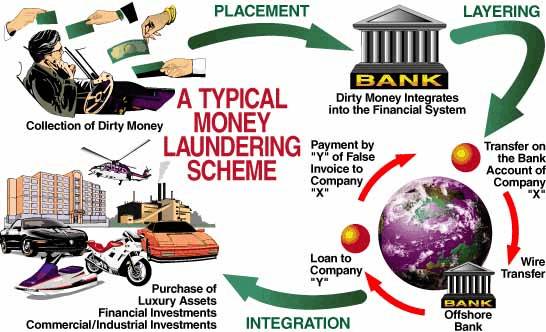
Money Laundry


Money laundering is the process of concealing the source of money obtained by illicit means. What does it means in simple terms is, it’s the act of making money that comes from Source A, look like it comes from Source B. In most cases criminals are trying to disguise the origins of money obtained through illegal activities so it looks like it was obtained from legal sources. Money laundering happens in basic three paces:

1) Placement - Cash is introduced into the financial system by some means 
2) Laying - Involves carrying out complex financial transactions in order to camouflage the illegal source 
3) Integration -  Entails acquiring wealth generated from the transactions of the illicit funds 

Making money is an aim of most of Criminal acts. It affects both directly and indirectly. So most organized criminal groups make sure to launder this money to prevent it being associated with criminal activities.  Cash is what those Criminal organizations get last and it’s a considerable risk to Criminals. Cash is also bulky and cumbersome to handle in large quantities. When cash enters the legitimate economy, it is particularly vulnerable to identification and law enforcement intervention. 

To avoid this, those organizations buy assets, or else they change locations including going abroad. Also use that cash to try and introduce it into the legitimate economy through businesses with a high cash turnover.

This is what has happened with British banking giant HSBC recently as the case ended up HSBC Holdings PLC agreed to pay a record $1.92 billion in fines to U.S. authorities. The bank violated federal laws by laundering money from Mexican drug trafficking and processing banned transactions on behalf of Iran, Libya, Sudan and Burma.

In the end, HSBC Holdings HSBC Holdings PLC admitted for having poor money laundering controls and apologized.

"We accept responsibility for our past mistakes. We have said we are profoundly sorry for them, and we do so again. The HSBC of today is a fundamentally different organization from the one that made those mistakes" HSBC Chief Executive Stuart Gulliver said.


Reference

BBC: HSBC to pay $1.9bn in US money laundering penalties http://www.bbc.co.uk/news/business-20673466  

BBC: HSBC money laundering report: Key findings http://www.bbc.co.uk/news/business-18880269

USA Today: HSBC will pay $1.9 billion for money laundering http://www.usatoday.com/story/money/business/2012/12/11/hsbc-laundering-probe/1760351/

SOCA: Serious Organized Crime Agency http://www.soca.gov.uk/threats/money-laundering

Photo:


Wednesday, January 16, 2013

අතීන්ද්‍රීය ඥානය


අධිමානසික සිද්ධීන් වර්ග 2කට බෙදා වෙන කල හැක. එනම් මානසික හා භෞතික වශයෙනි. මානසික අංශය Extra Sensory Perception (ESP) ලෙස හඳුන්වයි

පංච ඉන්ද්‍රේන්යන්ගෙන් තොරව පිටත සිදුවන සිදුවීම් දැනගැනීමට ESP යනුවෙන් හැඳින්වෙන එම අතීන්ද්‍රීය ඥාණයේ අංශ 3කි.
                             
                             දිවැස - Clairvoyance
                             පරසිත් දන්නා ඥානය - Telepathy
                             අනාග
 ඥානය - Precognition

පරිසරය පිළිබඳව පංච ඉන්ද්‍රියන් මඟින් ලබා ගන්න දැනුම නොහොත් සංනිවේදනයට වඩා අධිමානසික සංවේදනය ඍජු මාවතක් වේ. කෙසේ වෙතත්, අධි මානසික ශක්තීන් විද්‍යාගාර පරීක්ෂණ වලින් හෙළි දක්වා තිබුනද එය ක්‍රියාකාරී වන්නේ කෙසේද යන්න තවමත් බැරෑරුම් ප්‍රශ්නයක්ව පවතී.

ලොව පිළිබඳ දැනුම අප ලබා ගන්නේ පංච ඉන්ද්‍රියන් මත විශ්වාසය තබා ගනිමිනි.අපේ පංච ඉන්ද්‍රියට ස්වභාව ධර්මය හරියටම අහු වෙනවාද? නිසදුනක් වශයෙන් තත්පරයට කම්පන 16 000 ඉහල සංඛ්‍යාතයේ 'ශබ්ද' අපේ කණට නොඇසේ. සුනඛයන් හා වවුලන් වැනි අයට සතුනට ඊට ඉහළ සංඛ්‍යාත ඇසේ. වවුලනට 70 000ක් වැනි ඉහළ සංඛ්‍යාතයෙන් යුතු ශබ්ද වශයෙන් ඇසෙන බව පරීක්ෂණ අනුසාරයෙන් සොයා ගෙන ඇත.

මෙසේම අපට පෙනීම ඇති වන්නේද අලෝක තරංග වල එක්තරා සංඛ්‍යාතයක් තුලදීය. රූපයක් වශයෙන් නොව උෂ්ණයක් වශයෙන් අපට සංවේදී වන දෙයක් බකමූණන් විශේෂයට ඇස් වලට පෙනේ. මේවා පිළිබඳව වැඩි විස්තර භෞතික විද්‍යා පොත් කියවා දත හැකිය.

එබැවින් ලොව විනිශ්චය කිරීම පංච ඉන්ද්‍රියටම භාර කිරීම බුද්ධියෙන් පලා යෑමකි. එබැවින් අධි මානසික ශක්තීන් ගවේශණය කිරීමෙන් ලබා ගන්නා දැනුමද පංච ඉන්ද්‍රියන්ට සීමා වූ විද්‍යාව නව මඟකට යොමු කිරීමට උපකාර වෙනවා ඇත.

1934 දී මහාචාර්ය ජේ.බී.රයින්(J.B. Rhine) විසින් Extrasensory Perception නමින් වසර ගණනාවක් තමා කල පර්යේෂණ අලලා ඉතා වටිනා ග්‍රන්ථයක් පල කලේය. වර්ෂ 28ක් මොහුගේ අධිමානසිකාගාරය ඇමරිකාවේ ඩියුක් විශ්ව විද්‍යාලයේ අංශයක්ව පැවතුනි.

ඔහුගේ පරීක්ෂණ වලදී කාඩ් පත් ක්‍රමයක් හඳුන්වා දෙන ලදී. එය කාඩ්පත් 25කින් සමන්විතය. ඒවායේ ඇත්තේ සරල රේඛාමය රූප සටහන් 5කි. අද ඒවා ESP කාඩ් වශයෙන් හැඳිවෙන අතර එම කණ්ඩායමේ සිනිර්(Zenar ) නම් තැනැත්තෙක් එය සැකසූ බැවින් Zenar Cards වශයෙන් ද හඳුන්වයි.

ඒවායේ ඇති සංඛේත නම්,


  1. වෘතය
  2. තරංග රේඛා 3
  3. සතරැස් කොටුව
  4. එකතු කිරීමේ ලකුණ
  5. තරුව


මේ එක් රූප සටහනකින් පහ බැගින් පිළියෙළ වූ විට කාඩ් 25කින් යුත් කට්ටලයක් සෑදේ. ESP වල  ස්වාභාවය, මිනිස් සිතේ ස්වභාවය පිළිබඳව භෞතික න්‍යායන් සැකසීම, නවීන විද්‍යාව හා ESP මානසික විද්‍යාව විශ්ලේෂණය, මානව විද්‍යාව හා ESP, අධිමානසික විද්‍යාව පිළිබඳ මාර්ගෝපදේශනය වැනි බොහෝ මාතෘකා ඔස්සේ ලොව පුරා පර්යේෂණ සිදු වෙමින් පවතී.


ESP ශක්තීන් වැඩි වශයෙන් බලපවත්නා විශේෂ පුද්ගලයින් සිටියද එම ශක්තීන් විටින් විට සාමාන්‍ය පුද්ගලයින් තුළද විද්‍යාමාන වන බව පෙනේ. උදාහරණයකින් මෙය බලමු. ඔබ ඔබේ නිවසේ පුටුවක නිදහසේ වාඩි වී සිටින විට හදිස්සියේ ඔබේ සිතට පරණ මිත්‍රයෙක් මතකට නැඟී එයි. වසර ගණනාවකින්වත් ඔබට ඔහු හමුවී හෝ, ඔහු ගැන ඇසීමට හෝ අවස්ථාවක් නොලැබුණි.නිකන් අහම්බෙන් මෙන් මතක් වීමක් පමණි. විනාඩි කීපයකට පසු එම මිතුරා ඔබේ දොරකඩ ලඟ පෙනී සිටිනු දැක "දැන් මතක් කලා විතරයි"කියනු ඇත. මෙවැනි අත්දැකීම් බොහෝ දෙනාට ඇත.

මෙවැනි දෙයක් අහඹු දෙයක් යැයි සිතනවාට වඩා 6වෙනි ඉන්ද්‍රියක් ගැන සැක කිරීමට සාධාරණ හේතු දැන් සොයාගෙන ඇත.

මෙසේ අපිට නොදැනෙන අයුරින් අපේ අධි මානසික ශක්තීන් ක්‍රියාත්මක විය හැක.කිසියම් කෙනෙකු හමුවීමට අපට යෑමට සිදුවූ අවස්ථාවක අපට නිකමට මෙන් ඔහුව අද මුණ නොගැසෙන බව දැනේ.ඇත්ත වශයෙන්ම අපට ඔහුව මුණ නොගැසී ආපසු ඒමට සිදුවේ.මෙබඳු දේවල් පවා අපට නොදැනී ක්‍රියාත්මක වන ESP ශක්තීන් විය හැක.

සියළු අහඹු සිදුවීම්  ESP සිද්ධීන් ලෙස වරදවා වටහා නොගත යුතුය.මේ නිසා අධිමානසික ශක්තීන් වල බලපෑම තෝරා බේරා ගැනීමට දුෂ්කර වී ඇත.අධිමානසික ශක්තීන් පරික්ෂා කිරීම සඳහා මාර්ගෝපදේශන යන හිසින් පර්යේෂණ පවා දියත් කර ඇත්තේ මේ නිසාය.

පර්යේෂණ වලදී සොයාගත් වැදගත් දෙයක් වන්නේ ESP වල ඍණ ස්වභාවක්ද පවතින බවයි. එනම් කිසියම් හේතුවක් නිසා කිසි කරුණකදී නිවැරදි පිළිතුර වෙනුවට වැරදි පිළිතුර අපේ සිතට පහල වීමයි

මෙය පරීක්ෂණයකින් පැහැදිලි කරගත හැක.කාසියක් බිම හෙළමින් එය වැටෙන පැත්ත කඩදාසියක ලකුණු කරනු ලැබේ.සමහරවිට ඔබ සලකුණු කරන පැත්ත නොවැටී පිට පිටම දිගු වාර ගණනක් අනික් පැත්ත වැටෙන බව නිරීක්ෂණය කල හැක.මෙය ESP පරීක්ෂණ වලදී Gold Effect ලෙස හඳුන්වනු ලැබේ.

පිට පිට බොහෝ වාර ගණනක් හරි පැත්ත කීමට හැකි අවස්ථාවල එය Sheep Effect ලෙස හැඳින්වේ. මෙය ESP පරීක්ෂණ වලදී සොයාගත් අපූරු සිදුවීමකි.

කිසියම් වැඩ පිළිවෙලක් හරියන කොට දිගටම හරි යන්නේ වරදින විට දිගටම වරදින්නේත් මේ නිසා දැයි සැක කල හැක. ඔබ ගමනක් යනවිට බසය වරදියි, ඔබ ගිය රාජකාරිය ඉටු නොවේ, වෙනත් මඟකින් ඔබ එය ඉටු කර ගැනීමට යද්දී එයත් වරදී, ආපසු එනවිට තවත් කරදරයකි.

තරඟ වල දිගටම දිනන අවස්ථාද,පරදින විට දිගටම පරදින අවස්ථාද එළබෙන බව බොහෝ අය දනිති

එහෙත් මෙවැනි සිදුවීම් සඳහා ESP මෙන්ම චිත්ත බලය (Psychokinesis - PK) බලපෑම්ද තිබෙන්නට ඇති ඉඩකඩ ගැන විද්‍යාඥයෝ විමසිලි වෙති. එනම් කිසියම් දෙයක් සිදු වෙන්නට කලින් ඒ විය හැකි දේ විය හැකි අන්දම අපේ සිතට අනාගත ඥාණයක් හැටියට අපට දැනෙනවාද එසේ නැතිනම් අපට එසේ සිතෙන නිසා සිතේ බලපෑමකින් අනාගතේ එසේ සිදුවීමට බලපෑමක් කලාද යන්න දැන් සංකීර්ණ ප්‍රශ්නයක් වී තිබේ. විශාල වාර ගණනාවක් දාදු කැට බිම පෙරළමින් පරීක්ෂණ සිදු කල අවස්ථාවල සම්භාවිතාත්මක අගය ඉක්වමින් සිතකට දාදු කැට උවමනා පැත්ත පෙරළිය හැකි බවටද දැන් සංඛ්‍යාත්මක තොරතුරු ලබා ගෙන තිබේ.

එබැවින් අධිමානසිකව දැනුවත්ව හෝ නොදැනුවත්ව අන්තර් ජාලයක් සේ ක්‍රියා කරමින් සිතෙන් බාහිරයට බලපෑම් සිදු කරන බවට සාධක සොයා ගෙන ඇත.එබැවින් සිත හයවැනි ඉන්ද්‍රිය ලෙස තේරුම් ගන්නා අවස්ථාද ඇත.බුදු දහමෙහි ඉන්ද්‍රියන් 6ක් කියවෙන අතර සිත මනේන්ද්‍රීය වශයෙන් නම් කර ඇත.

උපුටා ගැනීම:  අධි මානසික විද්‍යාව Parapsychology - මඩවල උපාලි හිමි

පින්තූර: 

ප.ලි.


මීට සමගාමීව යන තවත් බ්ලොග් ලිපියක් මම දුටුවා. මෙන්න ඒ ලිපිය: පින් කැමැත්තෝ කියවා පින් ලැබ ගනිත්වා...... දේව් ගේ අඩවිය


Wednesday, January 9, 2013

Hedging


Hedging is a method that in practice to reduce the risk of loss caused by the price fluctuation. It consists of the purchase or sale of equal quantities of the same or very similar commodities in two different markets at approximately the same time, with the expectation that a future change in price in one market will be offset by an opposite change in the other market. Basically Hedging is a risk management strategy used in limiting or offsetting probability of loss from fluctuations in the prices of commodities, currencies, or securities. In effect, Hedging is a transfer of risk without buying insurance policies. Hedging is also common in the securities and foreign-exchange markets. 


Advantages of Hedging

1. Hedging using futures and options are very good short-term risk-minimizing strategy for long-term traders and investors.
2. Hedging tools can also be used for locking the profit.
3. Hedging enables traders to survive hard market periods.
4. Successful hedging gives the trader protection against commodity price changes, inflation, currency exchange rate changes, interest rate changes, etc.
5. Hedging can also save time as the long-term trader is not required to monitor/adjust his portfolio with daily market volatility.
6. Hedging using options provide the trader an opportunity to practice complex options trading strategies to maximize his return.


Disadvantages of Hedging

1. Hedging involves cost that can eat up the profit.
2. Risk and reward are often proportional to one other; thus reducing risk means reducing profits.
3. For most short-term traders, e.g.: for a day trader, hedging is a difficult strategy to follow.
4. If the market is performing well or moving sidewise, then hedging offer little benefits.
5. Trading of options or futures often demand higher account requirements like more capital or balance.
6. Hedging is a precise trading strategy and successful hedging requires good trading skills and experience.

Hedging is a familiar house hold term in Sri Lanka for quite a some time now. The Ceylon Petroleum Corporation entered into a hedging agreement with five local and international banks to buy crude oil at a capped price of $130 per barrel. The deal went sour when the oil prices fell below US$ 50 in the world market and CPC stood to lose nearly US$ 500 million. Supreme Court intervened and in November 2008 the Court ordered the CPC to suspend the controversial hedge payments to banks until a Central Bank probe into the matter is over.

The three foreign banks, CITI Bank, Standard Chartered Bank and Deutsche Bank sought redress with the arbitration panel in Singapore and Commercial High Court in London. Case ended CPC losing a $60 million hedging case against Deutsche Bank after a U.S.-based arbitrator ruled in favor of the bank.


References


Sri Lanka prepares to challenge the ruling on hedging case against Deutsche Bank http://www.colombopage.com/archive_12A/Nov04_1352007696CH.php


Photo: